
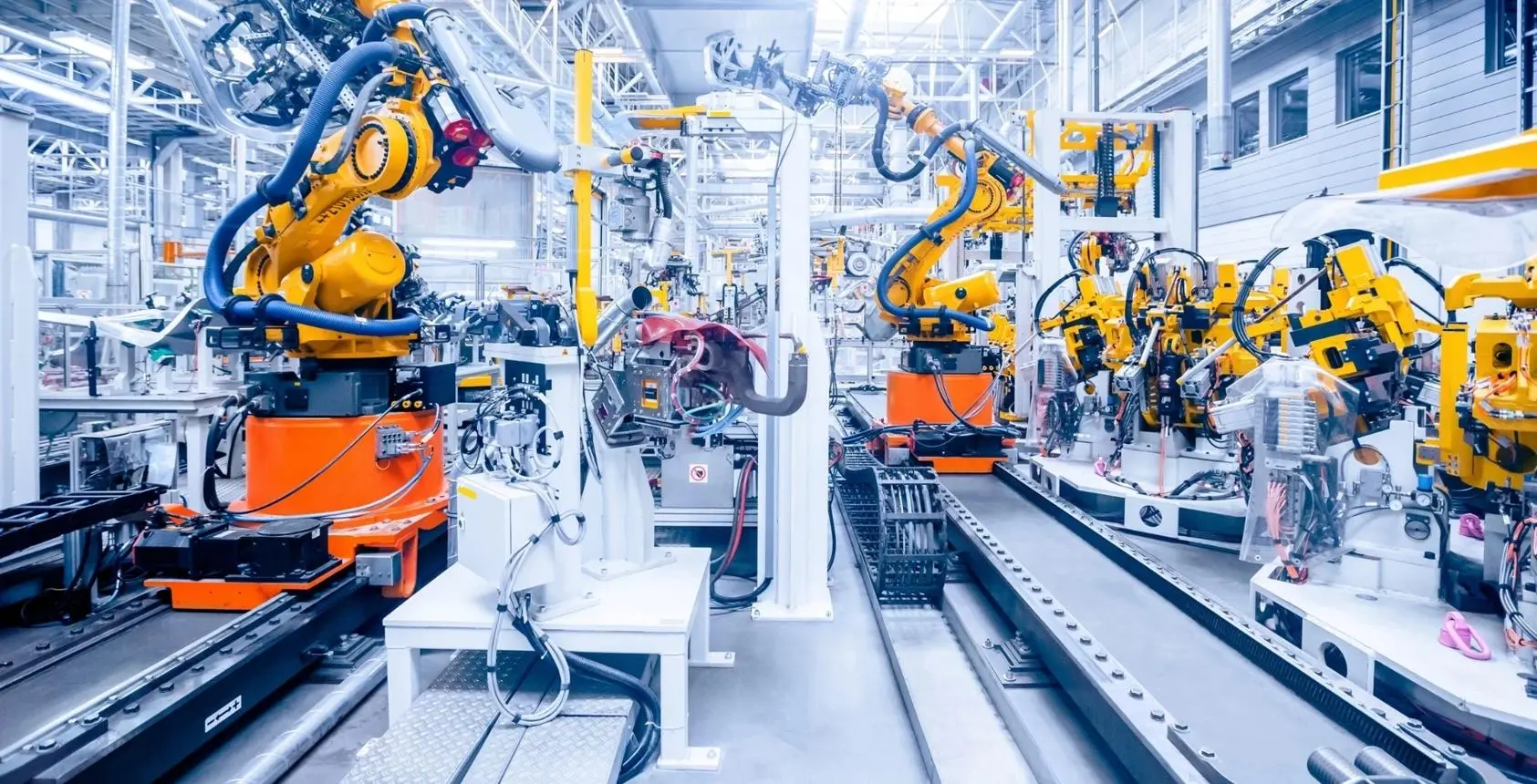
Manufacturing is changing rapidly. Factories that once depended heavily on manual operations are increasingly using machines, sensors, robots, programmable controllers and intelligent software to improve production.
Factory automation is no longer limited to large multinational manufacturers. As automation technologies become more flexible and scalable, manufacturers of different sizes are adopting automation to improve productivity, quality, safety and operational visibility.
Modern automation combines machines with control systems and data to create production environments that can operate more consistently and efficiently.
What Is Factory Automation?
Factory automation refers to the use of control systems, machines, sensors and software to perform manufacturing operations with reduced manual intervention.
A typical automated production environment may include:
- Programmable Logic Controllers (PLCs)
- Sensors and industrial instruments
- Motors and Variable Frequency Drives (VFDs)
- Robotic systems
- Human Machine Interfaces (HMIs)
- SCADA systems
- Machine vision
- Industrial communication networks
- Industrial IoT systems
These technologies work together to monitor processes, control machines and provide operators with useful production information.
Why Are Manufacturers Moving Towards Automation?
One of the biggest reasons is consistency.
Human operators can experience fatigue, variations in working conditions and differences in operating methods. Automated systems can execute repetitive operations according to predefined parameters.
Automation can help manufacturers achieve:
Higher Productivity: Automated machines can perform repetitive operations continuously and consistently.
Better Quality: Automated control can reduce process variations and improve product consistency.
Reduced Downtime: Monitoring systems can identify abnormal conditions and help maintenance teams respond faster.
Improved Safety: Automation can reduce human exposure to hazardous, repetitive or physically demanding operations.
Better Production Visibility: SCADA, MES and IIoT systems can provide real-time information about machines and production.
Automation Is More Than Robots
A common misconception is that factory automation simply means installing robotic arms.
Robots are only one part of an automation system.
A complete automated production line may involve sensors detecting a product, a PLC processing the sensor signal, a drive controlling a motor, an HMI displaying the machine status and a SCADA system collecting production information.
This integration is what makes modern automation powerful.
The Role of Data in Modern Factories
Today’s factories are increasingly becoming data-driven.
Machines can generate information about:
- Production quantity
- Machine running time
- Temperature
- Pressure
- Motor current
- Energy consumption
- Cycle time
- Equipment status
- Fault conditions
When this information is properly collected and analyzed, manufacturers can identify bottlenecks and make better operational decisions.
Building the Factory of the Future
The next generation of manufacturing will not simply be automated—it will be connected, intelligent and data-driven.
Industry 4.0 technologies such as IIoT, artificial intelligence, digital twins and advanced analytics are extending traditional automation into intelligent manufacturing environments.
The objective is not to automate everything blindly. Successful automation starts by identifying a specific operational problem and implementing the right technology to solve it.
Conclusion
Factory automation can help manufacturers improve productivity, quality, safety and operational visibility.
The most successful automation projects combine engineering knowledge, reliable control systems and a clear understanding of the manufacturing process.
For manufacturers looking to become more competitive, automation is increasingly becoming an important part of the journey toward smarter and more efficient production.