
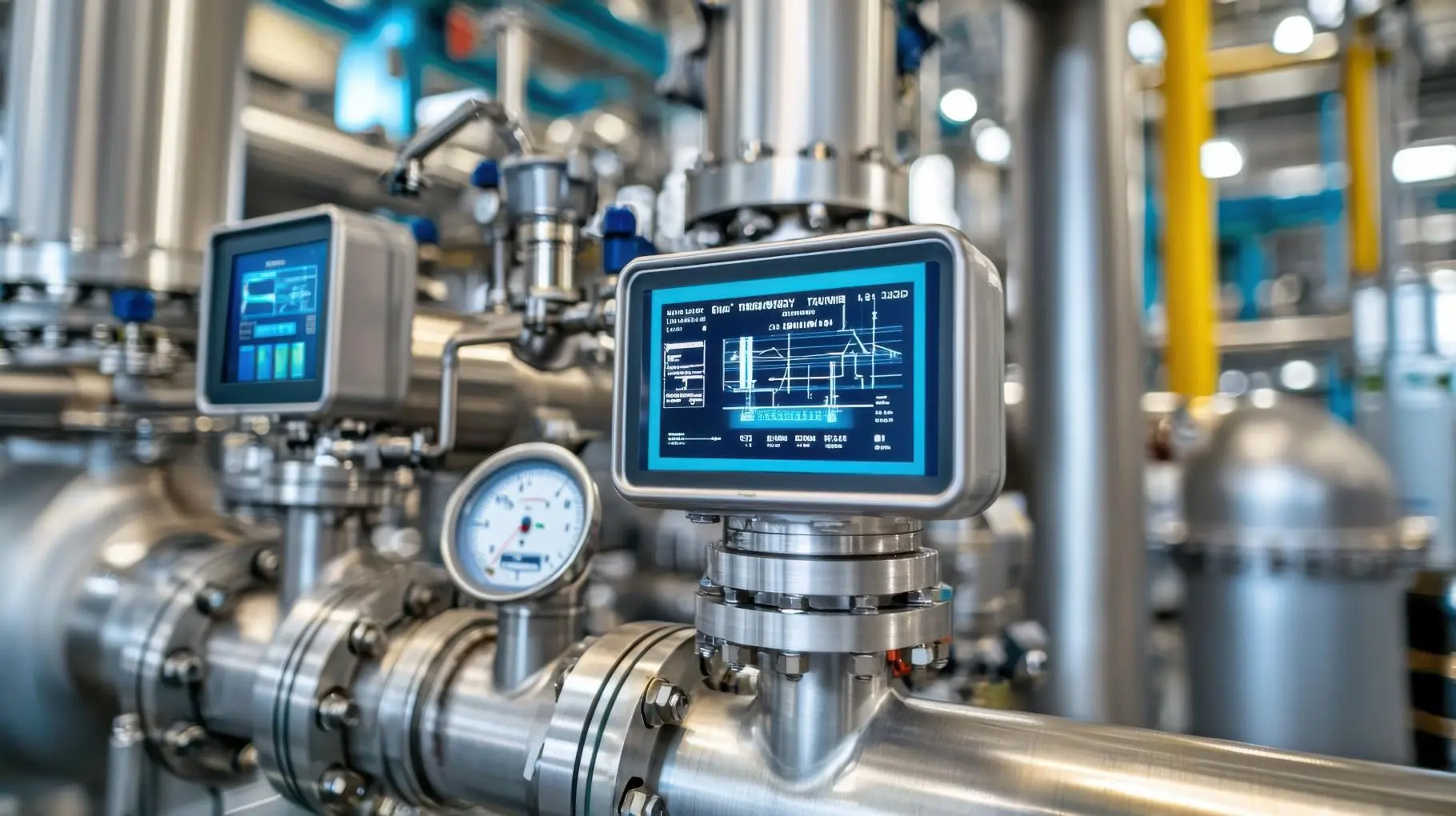
Industries such as oil and gas, chemicals, pharmaceuticals, power generation, food processing and water treatment depend on processes that must be controlled accurately and continuously.
A small variation in temperature, pressure, flow or level can affect production, quality or safety.
This is where process automation becomes essential.
Process automation uses control systems, instruments, sensors and software to monitor and regulate industrial processes with minimal manual intervention.
What Is Process Automation?
Process automation focuses on controlling industrial processes that often operate continuously or in batches.
For example, a manufacturing process may require:
- Maintaining a specific temperature
- Controlling liquid flow
- Maintaining vessel pressure
- Monitoring tank levels
- Controlling pumps and valves
- Managing heating and cooling
- Maintaining chemical concentrations
Instead of relying entirely on manual adjustments, automation systems continuously monitor process conditions and make appropriate control decisions.
Key Components of Process Automation
A process automation system typically consists of several layers.
Field Instruments
Sensors and transmitters measure variables such as temperature, pressure, flow and level.
Controllers
PLCs, DCS controllers and other control systems process signals and execute control strategies.
Final Control Elements
Control valves, motors, pumps and other devices respond to commands from the control system.
HMI and SCADA
Operators can view process conditions, alarms, trends and equipment status through graphical interfaces.
Why Accurate Control Matters
Consider a process where temperature must remain within a particular operating range.
If the temperature becomes too high, product quality may suffer. If it becomes too low, production efficiency may decrease.
An automated control loop can continuously compare the measured temperature with the desired setpoint and adjust the heating or cooling system.
This happens much faster and more consistently than manual intervention.
PLC, SCADA and DCS
Different industrial applications require different control architectures.
PLC: Commonly used for machine control, sequencing and many process applications.
SCADA: Provides supervisory monitoring, visualization, alarms, data collection and control.
DCS: Often used for large and complex continuous or batch processes where distributed control and extensive process management are required.
The choice depends on the process, plant architecture, scale and operational requirements.
Benefits of Process Automation
A properly designed process automation system can provide:
- Improved process stability
- Better product consistency
- Reduced manual intervention
- Faster response to process changes
- Improved monitoring
- Better alarm management
- Increased operational efficiency
- Improved safety
- Historical process data for analysis
Automation and Energy Efficiency
Process automation can also help organizations understand where energy is being consumed.
Monitoring equipment such as motors, pumps, compressors and heating systems can reveal inefficient operating conditions.
With better data, operators can identify opportunities to reduce unnecessary energy consumption while maintaining production requirements.
The Importance of System Integration
Modern plants rarely operate with a single automation system.
PLC, SCADA, DCS, sensors, drives, databases, MES and enterprise systems may all need to exchange information.
Proper integration allows information to move from the plant floor to higher-level systems, creating better visibility across the organization.
Conclusion
Process automation is fundamentally about control, consistency and reliability.
By combining instrumentation, controllers, communication networks and supervisory systems, industries can operate complex processes more efficiently and with greater visibility.
The right automation architecture can become a foundation for future digitalization and smart manufacturing.